
FAQs on Human Organ Donation
1. Which human body parts are eligible for donation?
After death, organs with sound functions identified by medical assessment, including the liver, kidneys, heart, lungs, pancreas and small intestine, can be donated. In addition, tissues such as corneas, skin, bones, blood vessels and nerves, as well as the whole cadaver, are acceptable for donation.
2. What purposes do donated human organs and tissues serve?
Donated organs save the lives of patients suffering from end-stage organ failure. Donated corneas restore vision for patients blinded by corneal diseases. Processed donated tissues are used to treat patients with corresponding illnesses, and donated cadavers are applied in medical teaching and scientific research.
3. What channels are available for volunteer registration?
Register via the WeChat official account "China Organ Donation".
Register through the website of China Organ Donation Administrative Center (www.codac.org.cn).
Complete paper registration at local Red Cross organ donation management offices or registration stations.
Register through institutions or organizations authorized by the China Organ Donation Administrative Center.
4. What credential will volunteers receive after completing registration?
The China Organ Donation Volunteer Registration Card, uniformly produced by the China Organ Donation Administrative Center, serves as the valid registration credential. It has two equally valid forms: an electronic card and a physical card. The electronic card is generated via the registration system on the official website or WeChat account. Those who require a physical card shall submit detailed mailing addresses and contact information on the registration platform, and the card will be delivered by post upon production.
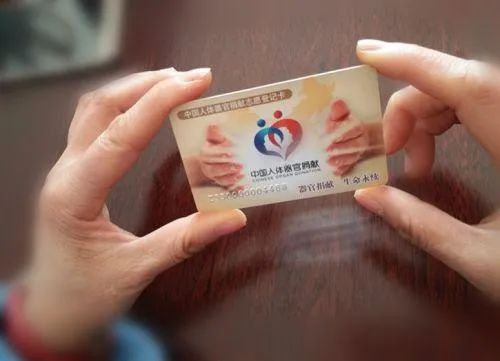
5. Can registered volunteers alter their donation intention later?
Human organ donation in China adheres to the voluntary principle. If you change your mind about donation, you may modify or cancel your registration on the official website at any time.
6. Can the donor’s family receive financial compensation?
Human organ donation in China follows the uncompensated principle, and any organ donation conducted for financial gain is prohibited. The donor’s family may receive humanitarian condolences and financial aid for living hardships from society.
7. Can donors designate a specific individual as the recipient of their organs?
Every life is precious. In accordance with national organ allocation and sharing policies, donated organs are distributed fairly and impartially to the most suitable patients with organ failure through the China Organ Transplant Response System.
8. Are there age restrictions on human body donation?
Due to natural organ aging, organ donors are generally under 65 years old. There is no absolute age limit for cadaver, corneal and tissue donation.
9. How to express the willingness to donate?
Any adult with full civil capacity (aged 18 or above) who intends to donate organs, cadaver, corneas or tissues free of charge after death for clinical treatment, medical teaching and scientific research may register as a volunteer via online or written channels to formalize such willingness.
10. Will the personal information of registered volunteers be leaked?
Volunteers’ personal data is under strict confidentiality protection. Only authorized staff with legitimate work demands are permitted access to such information.
11. If I register as a volunteer, will medical staff withhold emergency treatment if I have an accident?
Saving lives is the bounden duty of all medical practitioners. Having registered as an organ donation volunteer will not affect access to full rescue and treatment.
12. Does volunteer registration guarantee the realization of donation upon death?
In principle, individuals free of infectious diseases and malignant tumors qualify for organ donation after passing away. Final eligibility is determined through medical expert assessment, and the will of the immediate family must be respected.
13. What prerequisites must be met for organ donation?
Medical confirmation that the patient’s life cannot be saved;
Medical assessment verifying that the organs are viable for transplantation;
No prior statement from the deceased refusing organ donation;
Unanimous consent for organ donation from all immediate family members (spouse, adult children and parents);
On-site witness by a professional human organ donation coordinator.
14. Is living organ donation allowed?
China primarily carries out posthumous organ donation of citizens. Living organ donation is only permitted between close relatives; living donation to unrelated individuals is prohibited.
15. How can people give this precious gift of life?
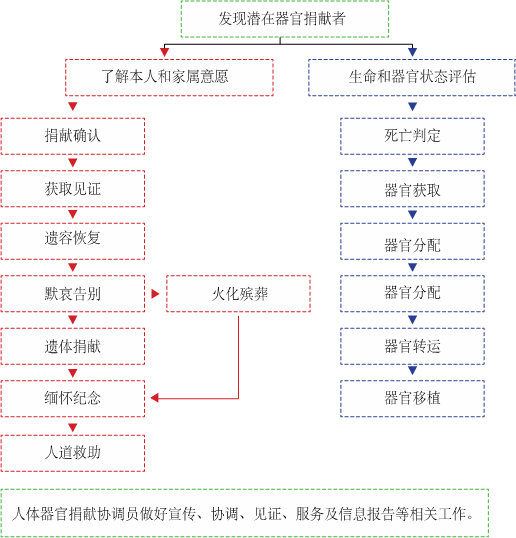
After the patient’s passing, if organs pass medical evaluation and all family members give unanimous consent, organs will be retrieved in line with the stated donation intention under the witness of a coordinator. The retrieved organs are allocated fairly to patients with organ failure and transplanted to grant recipients a new lease of life.
16. If I only consent to donate certain organs, will other organs be removed without permission?
Human organ donation coordinators will confirm the exact scope of donation in writing with the donor’s family. During organ retrieval surgery, doctors will only harvest the organs agreed upon by the family, with a human organ donation coordinator present as a witness.
17. Will organ retrieval disfigure the donor’s body?
Organ retrieval is performed under rigorous surgical standards. Surgeons will carefully suture all incisions and restore the original appearance of the body after the procedure. All personnel present will observe a moment of silence to pay tribute to the donor, and the entire donation process fully embodies respect for the deceased.
18. Does the donor’s family need to bear any costs arising from organ donation?
All expenses incurred throughout the organ donation process are fully covered and shall not be borne by the donor’s family.
19. Can donors and recipients obtain each other’s personal information?
In line with international conventions and current national policies, a double-blind system is implemented to separate the personal information of donors and recipients. If the donor’s family or recipient wishes to exchange regards and the other party consents, relevant staff may pass messages between the two sides. For publicity purposes, meetings may be arranged with the approval of the human organ donation management institution and mutual consent from both parties, yet direct long-term contact between donors and recipients is not encouraged.
20. What is the standard procedure for posthumous human organ donation of citizens?
(Source: WeChat Official Account of China Red Cross News)