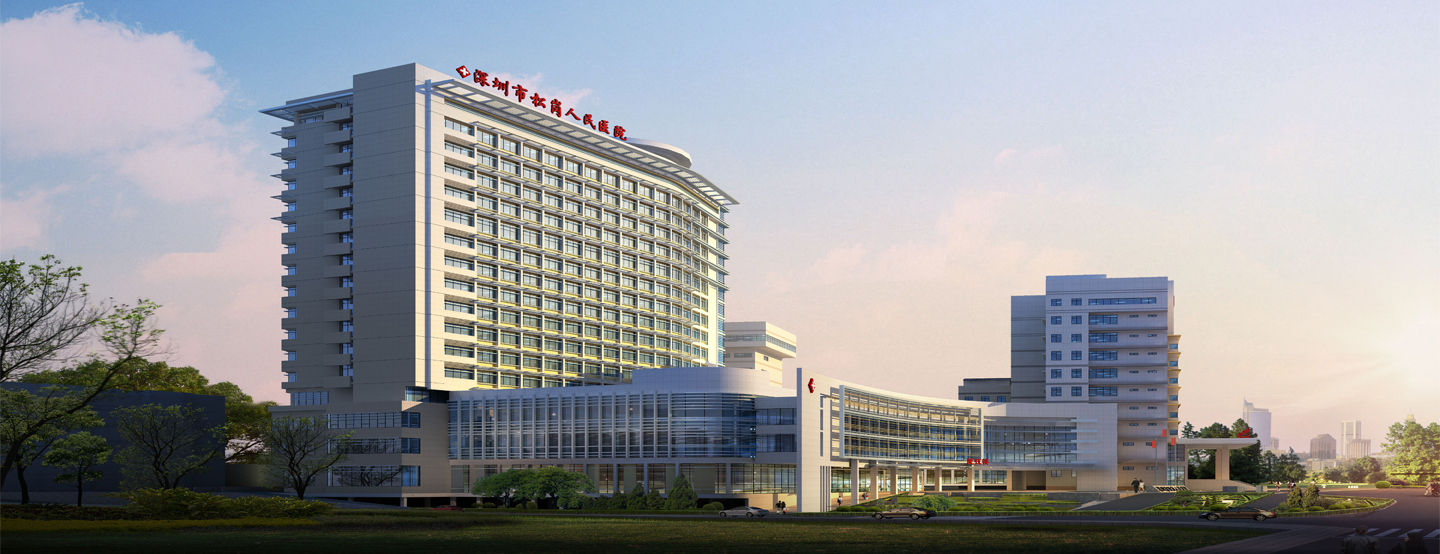
Neurology Dept of Shenzhen Bao'an District Songgang People's Hospital was founded in August 2019. As a key clinical specialty of this Grade III general hospital integrating clinical practice, scientific research and teaching, it serves as the lead discipline for the hospital’s Stroke Center, Vertigo Center and Multidisciplinary Team (MDT) for Sleep Disorder Clinic. The department has 53 designated beds, with an annual outpatient volume of approximately 25,000 visits and around 2,500 discharged patients every year.
The department holds vice-chairman positions in the Vestibular Medicine Branch of Guangdong Medical Association, the Medical-Prevention Integration Branch and Neurointervention Branch of Shenzhen Stroke Society. It is also a member unit of South China Vertigo Center Alliance, Geriatric Cognitive Disorder Diagnosis and Treatment Alliance, Shenzhen Rare Neurological Diseases Alliance, Shenzhen TCM Encephalopathy Alliance and Shenzhen Clinical Research Center for Neurological Diseases.
In 2025, the department took the lead in successfully applying for the National Grade III Hospital Stroke Center accreditation. From 2020 to 2025, it ranked first in the median Door-to-Needle Time (DNT) among all hospitals for six consecutive years as assessed by Shenzhen Cerebrovascular Disease Quality Control Center. Its standardized green channel operation model is known as the "Songgang Model of Shenzhen", which has been promoted and shared through training among designated cerebrovascular hospitals across Shenzhen and Guangdong Province. The department has been awarded the Advanced Unit for Continuous Quality Control by Guangdong Provincial Neurology Quality Control Center.
In 2024, the department initiated the establishment of the MDT Vertigo Center and carried out in-depth cooperation with Professor Huang Haiwei’s team from the First Affiliated Hospital of Sun Yat-sen University, comprehensively upgrading the diagnosis and treatment capacity for vertigo disorders and winning widespread trust and recognition from local residents.
The department has a medical and nursing team of 26 members, including 10 physicians and 16 nurses. The physician team consists of 2 Chief Physicians, 2 Associate Chief Physicians, 4 Attending Physicians and 2 Resident Physicians. Over 80% hold master’s or higher degrees, including 1 Doctor of Philosophy and 7 Masters; one nurse holds a master’s degree.
The department specializes in the diagnosis and management of cerebrovascular diseases, vertigo, headache, sleep disorders, peripheral neuropathy, central nervous system infections, epilepsy, Parkinson’s disease, dementia, spinal cord lesions, myasthenia gravis, multiple sclerosis, movement disorders and rare neurological diseases. It vigorously develops sub-specialties covering cerebrovascular diseases, neurointervention, vertigo, sleep disorders, cognitive impairment, peripheral neuropathy, epilepsy, central nervous system infections and neurodegenerative diseases, and sets up specialized clinics for cerebrovascular diseases, neurointervention, vertigo, sleep and memory disorders.
It also boasts dedicated teams for neuroelectrophysiology, cerebral-cardiac hemodynamic monitoring, transcranial magnetic stimulation (TMS) therapy and swallowing function assessment, providing robust support for comprehensive, precise diagnosis and treatment of neurological disorders.
Over the past five years, the department has undertaken 12 continuing education programs at the provincial level as well as provincial, municipal and district research projects, and published 9 SCI papers. Focused on the all-round improvement of clinical skills, research capacity, teaching standards and service quality, the department has formed a development framework supported by both clinical work and scientific research with distinctive sub-specialties, evolving into an outstanding discipline with strong influence and competitiveness.
Abiding by the oath of equality, benevolence and patient priority, and adhering to the treatment principles of standardization, precision and timeliness, the Neurology Dept wholeheartedly delivers high-quality medical services to all patients.
Core Service Advantages
1. Rapid intravenous thrombolysis for acute cerebral infarction
2. Neurointerventional therapy: digital subtraction angiography (DSA), emergency thrombectomy, intracranial and extracranial stent implantation and balloon angioplasty for vascular stenosis
3. Vertigo diagnosis and treatment: rapid videonystagmography (VNG) detection and canalith repositioning, with in-depth cooperation with Professor Huang Haiwei’s team from the First Affiliated Hospital of Sun Yat-sen University
4. Sleep disorder management: Transcranial Magnetic Stimulation (TMS), an effective therapy for insomnia, is available in the department. Combined with pharmacotherapy, it achieves superior outcomes with professional team care
5. Assessment and comprehensive treatment of cognitive impairment
6. Assessment and comprehensive rehabilitation for swallowing dysfunction
7. Neuroelectrophysiology service: electroencephalography (EEG), electromyography (EMG), transcranial Doppler (TCD), cerebral artery stiffness testing, cerebral-cardiac hemodynamic monitoring, non-invasive intracranial pressure measurement, bubble test and microembolus detection