
At 15:00 on September 29, 2019, an emergency drill on the disposal of an enterovirus nosocomial infection outbreak was carried out in an orderly manner in the Neonatal Department. President Chen Guihong served as the General Commander, and Vice President Zhang Xu acted as the Deputy General Commander.
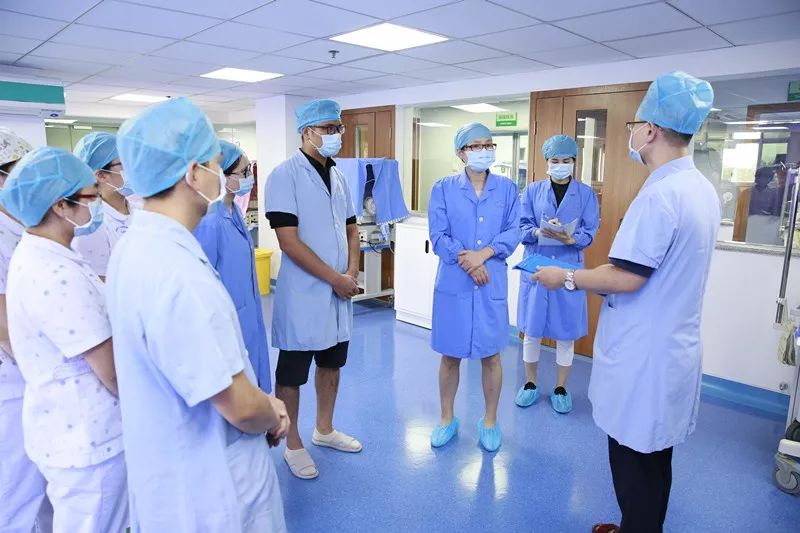
Based on the Guidelines for Prevention and Control of Enterovirus Infections in Neonatal Departments of Medical Institutions of Guangdong Province and Guidelines for Prevention and Control of Obstetric Infections in Medical Institutions of Guangdong Province, the Hospital-acquired Infection Control Department designed the drill scenario: From September 15 to 18, 2019, five infants in the Neonatal Department successively developed symptoms including fever or hypothermia, poor response, feeding refusal, vomiting and diarrhea. Laboratory tests all returned positive qualitative nucleic acid results for Coxsackievirus A16, and a nosocomial infection outbreak was initially identified.
After receiving the epidemic report, Director Chen Fang of the Hospital-acquired Infection Control Department immediately went to the Neonatal Ward for further verification. A nosocomial infection outbreak was preliminarily confirmed and control measures were required. She promptly reported to Vice President Zhang, the executive medical director, requesting activation of the emergency plan for nosocomial infection outbreak reporting and disposal.
After verifying the epidemic on site, Vice President Zhang Xu telephoned President Chen Guihong to apply for the activation of the emergency plan, and President Chen issued an order to launch the plan without delay.
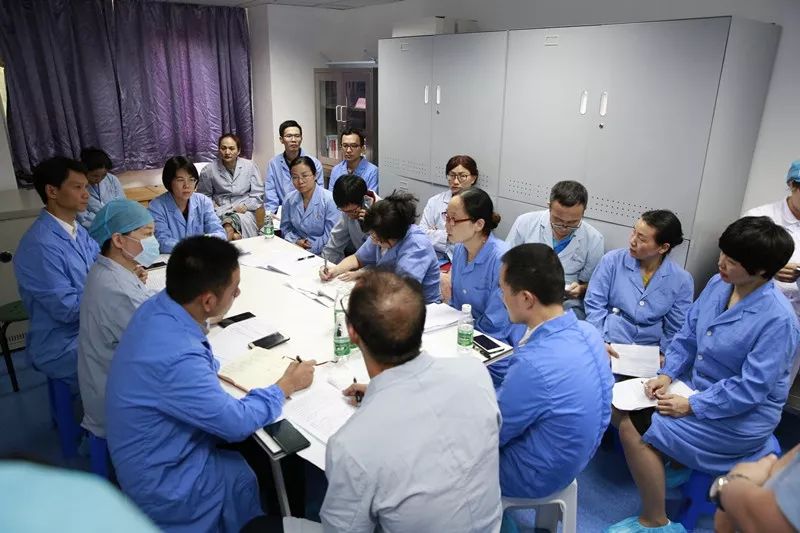
Members of the emergency response team, including the Medical Affairs Dept, Nursing Dept, General Services Dept, Pharmacy Dept, Preventive Healthcare Dept, Clinical Lab, Equipment Dept and Security Dept, rushed to the Neonatal Department upon notification. Following the core principle of "treating patients, conducting investigations, implementing control and handling incidents simultaneously", all teams performed respective duties in an orderly on-site response.
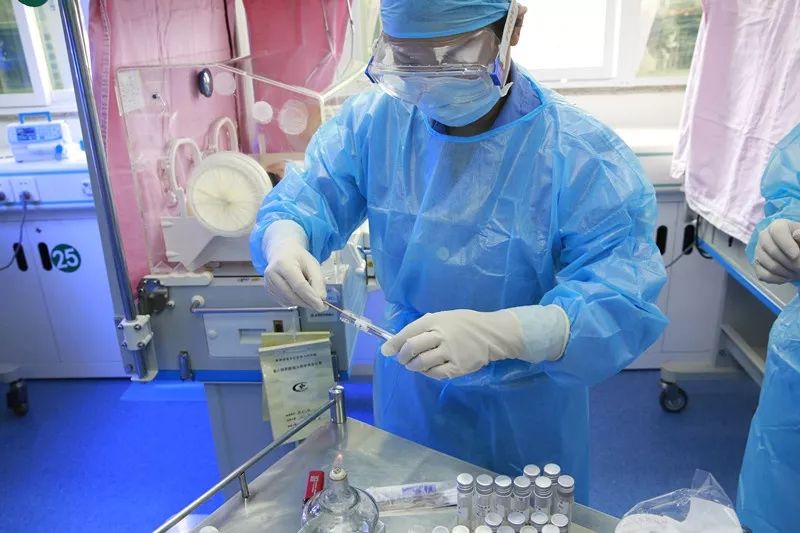
The medical treatment group held discussions on infected cases. The disinfection and isolation group guided patient placement and the implementation of disinfection and isolation protocols. The epidemiological investigation group conducted on-site surveys and collected environmental hygiene samples, throat swabs and anal swabs, which were sent to Bao'an Center for Disease Control and Prevention for pathogenic testing. The logistics support group inspected whether equipment, medicines and disinfection supplies were sufficient for treatment.
Upon completion of on-site investigations, the emergency response leading group held a meeting and preliminarily confirmed that the incident was a nosocomial infection outbreak caused by Coxsackievirus, which required hierarchical reporting.
With active treatment and effective isolation measures, the infants' conditions and the epidemic were well controlled. The emergency response was terminated one week later, marking the end of the drill.
All team members reviewed the drill and identified bottlenecks in epidemic reporting, specimen transportation and public opinion management. Participants exchanged extensive opinions and finally finalized standardized workflows for these three links.
Vice President Zhang Xu summarized the drill, affirming the efficient coordination and rapid response of all departments during the exercise. He pointed out that drills help sort out real-world emergency workflows, and AB backup staff should be assigned to each response post. He emphasized that clinical departments need to strengthen the ability to detect early signs of nosocomial outbreaks to enable early identification and intervention for patient safety.
In the final evaluation of the drill, President Chen Guihong stressed the vital importance of infection control work, noting that no detail is trivial and implementation is the core priority. She urged all departments to rectify the deficiencies identified in the drill as soon as possible.
This drill translated theoretical protocols into practical operations, enabling all participants to master calm emergency response under simulated crisis conditions and comprehensively improving the capacity of all medical staff in our hospital to handle nosocomial infection prevalence and outbreaks.