

From October 25 to 26, 2025, the 9th Qianhai Maternal-Fetal Medicine Conference, jointly organized by Shenzhen Bao'an District Maternity and Child Health Hospital and the Department of Obstetrics and Gynaecology of The Chinese University of Hong Kong, was successfully held in Qianhai, Shenzhen. Under the theme "Innovation and Collaborative Development," the conference brought together top experts and scholars in obstetrics and fetal medicine from across China and the Asia-Pacific region to discuss cutting-edge topics in maternal-fetal medicine and fetal therapy, injecting new momentum into maternal and child health in the Greater Bay Area and beyond. It is reported that the conference attracted 4,000 participants from both domestic and international circles, attending either onsite or online.
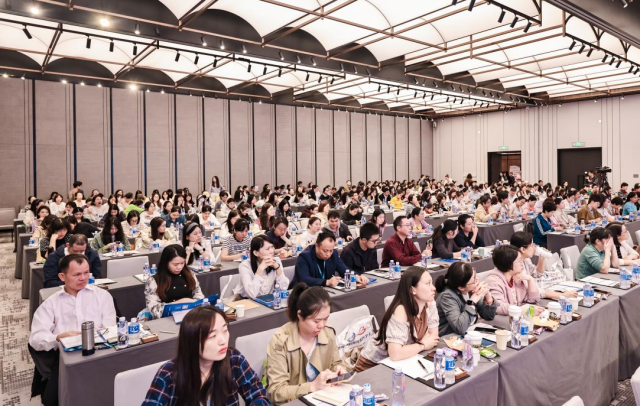
As a high-level academic platform for maternal-fetal medicine and fetal therapy in the Greater Bay Area, the conference closely followed the trend of Shenzhen-Hong Kong integration and international collaboration, building a high-level international academic exchange platform. Key topics included technological breakthroughs in fetal intrauterine therapy, multidisciplinary management of high-risk pregnant women, the cross-disciplinary integration of artificial intelligence with maternal-fetal medicine, and the overall improvement of maternal and child healthcare service capacity in the Greater Bay Area. The conference aimed to address new challenges in maternal-fetal health through cutting-edge exchanges and practical cooperation, contributing insights and solutions to building the Greater Bay Area into a dynamic and competitive hub for maternal-fetal medicine.
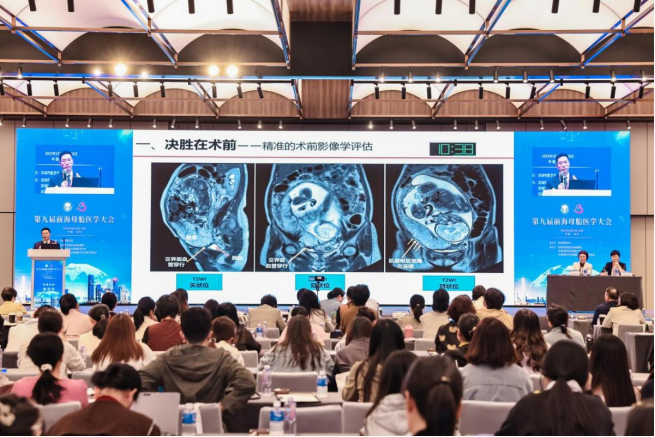
Experts at the conference engaged in multi-dimensional and in-depth discussions on hot and difficult issues in maternal-fetal medicine, providing valuable guidance for perinatal medical staff to broaden their diagnostic and therapeutic approaches and enhance their operational skills. A highlight of the conference was the case study session, where experts conducted in-depth analysis and lively discussions on complex and challenging cases such as spontaneous splenic rupture during pregnancy, reduced fetal movements complicated by neonatal anemia, septic shock, placenta accreta, thyroid cancer during pregnancy, and fetal hydrops caused by compound heterozygous mutations of the CELSR1 gene with intrauterine treatment, generating many innovative diagnostic and therapeutic ideas.
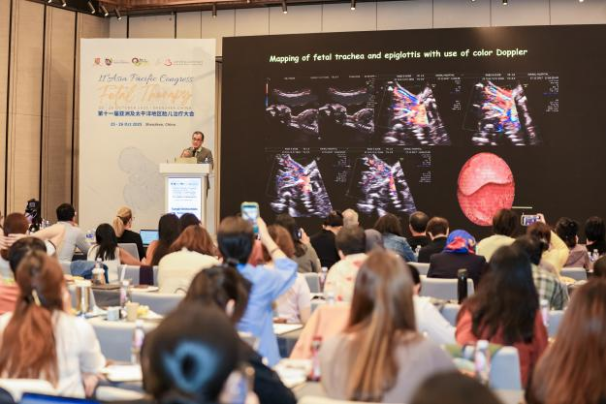
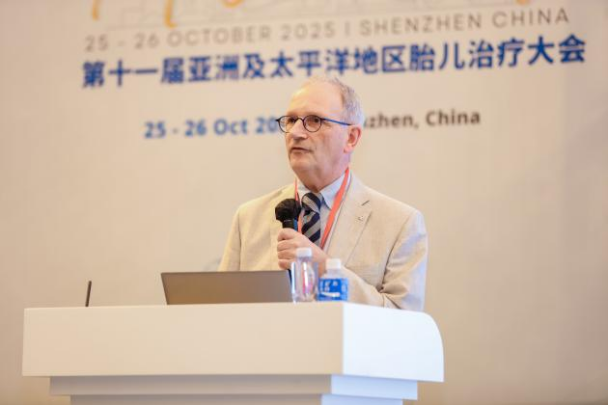
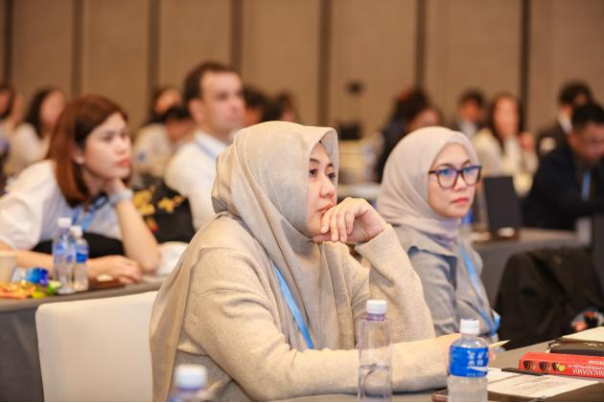
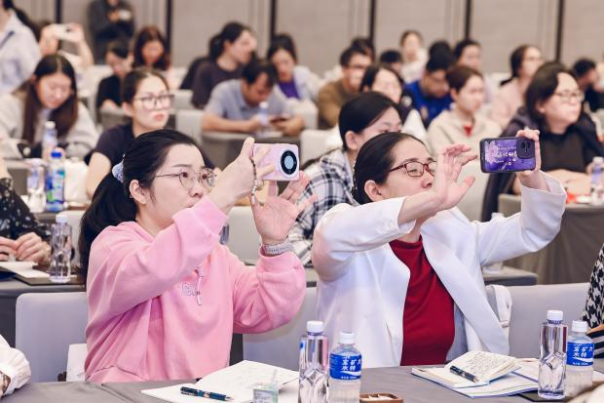
Professor Liao, Tak Yeung Leung from The Chinese University of Hong Kong stated in his speech that a close collaborative mechanism has been established with Bao'an District Maternity and Child Health Hospital. Over the past year, the two parties have jointly established a Maternal and Child Health Research Center and a Simulation Training Center, carrying out intrauterine treatment and genetic diagnosis. In the future, he hopes to further promote maternal-fetal medicine and fetal therapy technologies, extending the Shenzhen experience to a broader range of fields and contributing wisdom to healthcare in the Asia-Pacific region.
Han Jing, Deputy Director of Bao'an District Health Bureau, attended the opening ceremony and delivered a speech. She noted that after eight years of development, the Qianhai Maternal-Fetal Medicine Conference has steadily grown into a benchmark academic platform in the field of maternal-fetal medicine in the Greater Bay Area. Bao'an District Maternity and Child Health Hospital continues to introduce advanced clinical technologies, particularly in obstetrics and maternal-fetal medicine, with many technologies ranking among the top in Shenzhen. In the future, the hospital will further provide international medical diagnosis and treatment services to women and children in the Guangdong-Hong Kong-Macao Greater Bay Area and even the whole country.
Ye Pei, Deputy Secretary-General of Shenzhen Medical Association, stated in his address that maternal-fetal medicine, as a promising and emerging field, started relatively late in China. However, through the unremitting efforts of the academic community, China has approached international standards in fetal disease screening and maternal health management. This conference focused on common pregnancy-related diseases, critical and severe conditions during pregnancy, updates to clinical guidelines, fetal intrauterine therapy, multidisciplinary management during pregnancy, and other clinical challenges, while also incorporating cross-disciplinary content such as artificial intelligence, aiming to promote innovative development in maternal-fetal medicine.
According to Zhu Yuanfang, Party Secretary of Shenzhen Bao'an District Maternity and Child Health Hospital, since the first Qianhai Maternal-Fetal Medicine Conference was held in 2017, after eight years of development, the conference's influence and reach have continued to expand, extending from the Guangdong-Hong Kong-Macao Greater Bay Area to the whole country and even the entire Asia-Pacific region. In recent years, Bao'an District has made continuous efforts in the field of maternal-fetal medicine, actively linking top medical resources at home and abroad, and engaging in in-depth cooperation with renowned institutions such as The Chinese University of Hong Kong, Shanghai Children's Medical Center, and Peking University Third Hospital. Notably, the Women and Children's Medical Center (Shenzhen) of the CUHK Excellence in Children's Health Research Institute, jointly established with The Chinese University of Hong Kong, has successfully introduced advanced maternal and child healthcare concepts and technologies from Hong Kong. With technical support from Professor Liao, Tak Yeung Leung's team at CUHK, Bao'an District Maternity and Child Health Hospital has carried out fetal intrauterine surgeries and related research, covering precision diagnostic and therapeutic technologies such as intrauterine blood transfusion, fetal body cavity-amniotic cavity shunting, and fetoscopic surgery. To date, the hospital has completed nearly 300 intrauterine treatment procedures, ranking first in Shenzhen in both the types and number of procedures, attracting patients from Beijing, Shanghai, Hunan, Fujian, Guangxi, Yunnan, and other regions to seek medical care. Through in-depth collaboration with Professor Liao, Tak Yeung Leung's maternal-fetal medicine team, more and more families can access world-class fetal therapy services close to home, effectively enhancing patients' sense of healthcare access and well-being.
As the district-level maternity and child health hospital with the largest delivery volume in China, with annual deliveries ranging from 18,000 to 21,000 over the past five years, Bao'an District Maternity and Child Health Hospital has carried out in-depth innovations to support such a large delivery volume while ensuring maternal and infant safety. These innovations include establishing a multidisciplinary and efficient obstetric team and creating patient-friendly, intelligent service processes. In 2024, Bao'an District Maternity and Child Health Hospital was approved as a medical institution qualified for the "Hong Kong/Macao Pharmaceutical and Device Access" pilot program, becoming the third hospital in China to introduce anti-D immunoglobulin. "Some new drugs and new medical devices used internationally can now be used simultaneously in our hospital. Anti-D immunoglobulin, needed by mothers with Rh-negative blood type, previously required mothers to travel to Hong Kong. Now, it can be administered at Bao'an District Maternity and Child Health Hospital," said Zhang Quanfu, Vice President of Bao'an District Maternity and Child Health Hospital.
In the future, leveraging the dual opportunities of the "Guangdong-Hong Kong-Macao Greater Bay Area" and the "Shenzhen Pilot Demonstration Zone," Bao'an District Maternity and Child Health Hospital will continue to deepen cooperation with institutions such as The Chinese University of Hong Kong, Shanghai Children's Medical Center, and Peking University Third Hospital, continuously integrating high-quality medical resources, promoting technological innovation and service upgrades, and effectively improving the level of maternal and child healthcare in the Greater Bay Area.